In the Field Again
We have been busy looking at dozens of localities and testing for emergent infectious disease. We wanted to show everyone some images from the field.

Some individual Darwin's Frogs (Rhinoderma darwinii) have a nice mix of greens with other colors.

The ventral surface of Darwin's Frogs (Rhinoderma darwinii) is often times a beautiful series of white patches on a darker background color.

At the end of each field day, gear is cleaned off with bleach.

From left to right: Bill Lamar, Danté Fenolio, Andres Charrier

Andres Charrier captured this beautiful images of Pristidactylus valeria with a juvenile.

From left to right: Marty Crump, Bill Lamar, Danté Fenolio, Andres Charrier

It's always nice to see amphibians calling and breeding in the field. This is the Four Eyed Frog (Pleurodema thaul) calling.

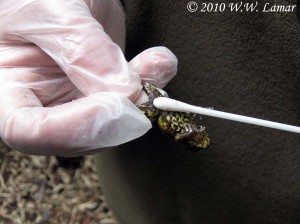
Skin swabs are the contemporary way that scientists test for amphibian chytrid fungus. The process is relatively non-invasive. A swab is rubbed on the skin of the amphibian a number of times, then sent to a lab for PCR testing. The animal is released, unharmed.

Field trips are busy. Gear takes up much of the room in the field vehicles.

Often times, we use horses to trek into a remote forest patch. We camp in these remote sites for several days while we survey the amphibians there.

Andy is wondering just how well Dante will do on this horse...
Much more to come…
We Are in the News!
Many thanks to Wildlife Extra for their top quality article on our breeding program!
The first frogs in our facility: Sweet Success
Once all of the environmental systems in our captive breeding facility checked out, we added our first group of frogs. Somewhat surprisingly, the frogs immediately began enacting reproductive behavior. We had calling and a bit of dancing around between males and females. We are happy to report that we already have at least one male frog holding developing young in his vocal sac!
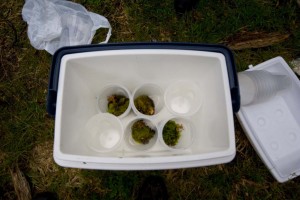
When we collected our first group of Darwin's Frogs from the field, we used a cooler to keep the frogs at an appropriate temperature during the trip back to Santiago.
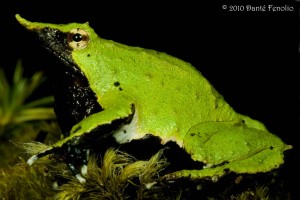
This is the male Darwin's Frog that is holding developing young in his vocal sac.
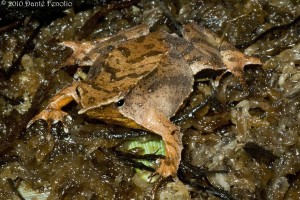
This is the the female that we believe bred with our male. Her job is now done. Female frogs deposit eggs and the male frogs take over from there. Males attend the developing eggs before taking their young into their mouths and on into their vocal sac.
Placing the finishing touches on the breeding center
Field Work
Our travels around Chile have been many. We are always investigating new and historic localities for Darwin’s Frogs. We wanted to provide an idea of some of the sights we have been taking in during our field adventures. (more…)
Darwin’s Frogs in the Field
Our team has been busy working in the field. Among our objectives, we want to visit historical localities for Darwin’s Frogs and determine if they are still there. If we find frogs, we take skin swabs and see if amphibian chytrid fungus is present. (more…)
Installing the Darwin’s Frog Breeding Center, Day 10
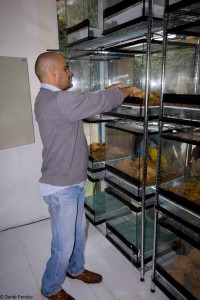
A few final touches and...
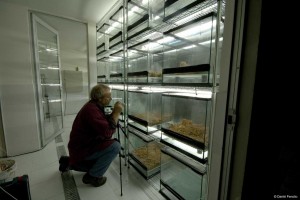
some adjustments here and there and...
the completed racks are ready for final positioning
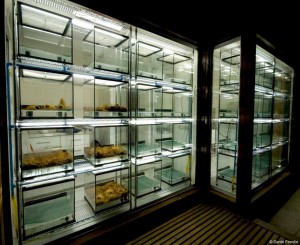
VOILA! Ladies and gentlemen, the Darwin's Frog Breeding Center is ready for business!!
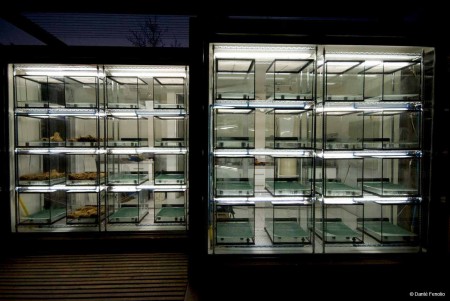
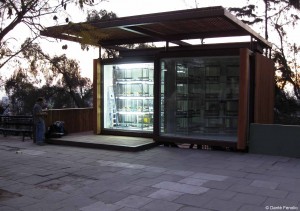
The Chileans did a great job with the building design.
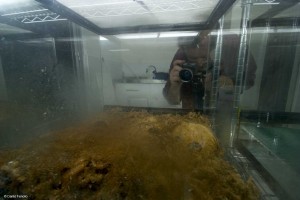
The moss, the coconut condos, the misters...all practically begging for frogs.
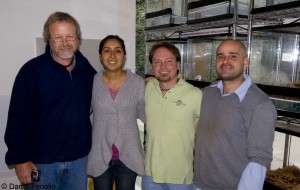
Bill, Marcela, Dante, and Andy enjoy the moment.
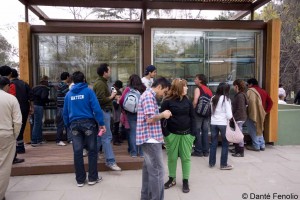
And the public likes it. Hey! We don't seem to need frogs! This works!

Incomparable Chilean hospitality, like her incomparable wines, make for a wonderful send-off!
Lots more on the way…like frogs, field work, and much more.
Installing the Darwin’s Frog Breeding Center, Day 9
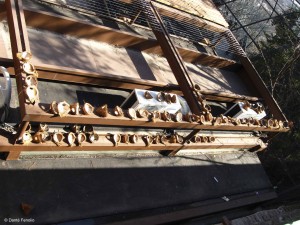
After several days in the Chilean sun, the coconuts should be dry enough for cleaning.
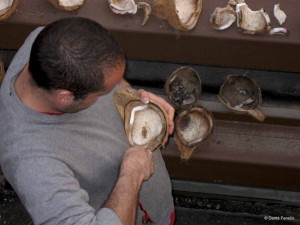
Some, however, are more cooperative than others.
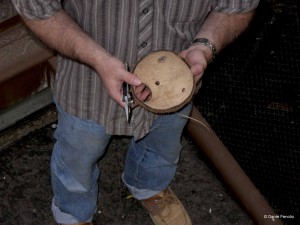
At last! A frog condominium!
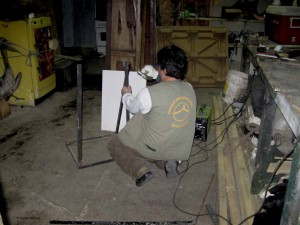
Talented zoo staff welded a stand for the mister pump and bucket.
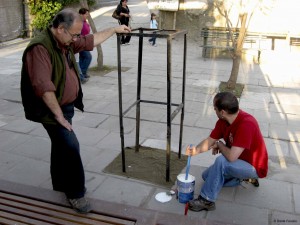
Jaime wonders whether Andy will paint the stand or the sidewalk.
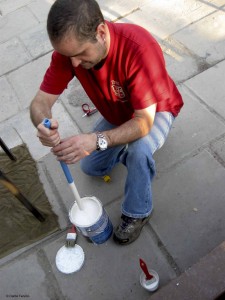
He painted a little of each, as it turned out.
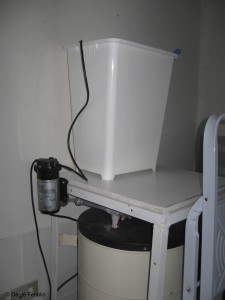
Finally the misting pump and barrel plus stand are ready.
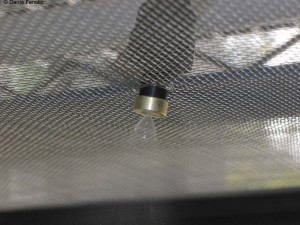
Seeing perfect sprays of mist in each terrarium put smiles on our faces.
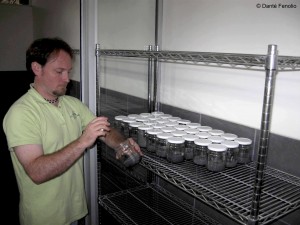
We collected collembola and got our cultures started in the insect room.
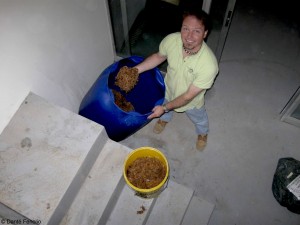
Happily, Chilean moss is the best in the world for frog terraria.
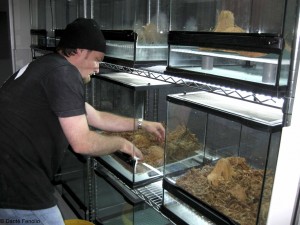
At last, things are coming together!
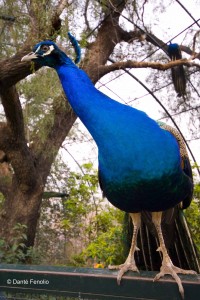
We got the feeling the peacock was interested in using our moss for a nest.

Now, to set up the foggers.
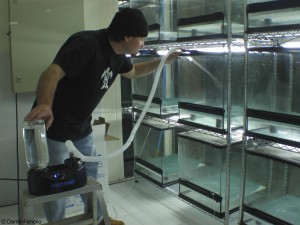
and they work perfectly!!
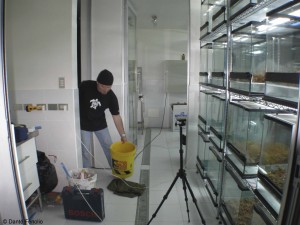
Time to tidy up and take some pics!
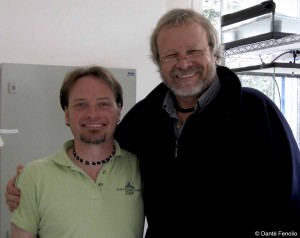
Bill Lamar and I are happy to see everything nearing final form.
More soon…
Installing the Darwin’s Frog Breeding Center, Day 8
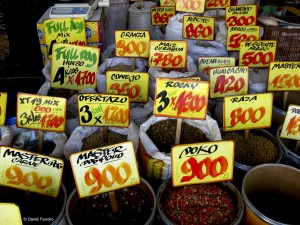
We prowled the wonderful market in Santiago in search of bean beetles to start some of the food cultures for the frogs.
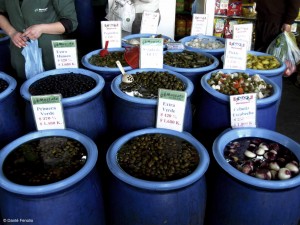
The kaleidoscope of colors and aromas whetted our appetites.
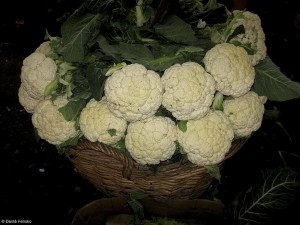
And the fresh produce was a sight to behold!
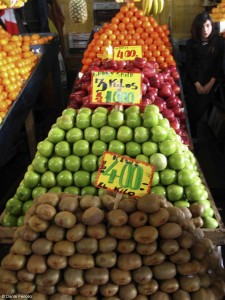
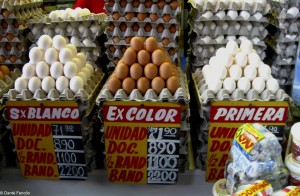
Too bad frogs can't arrange their eggs nicely in pyramids like these!
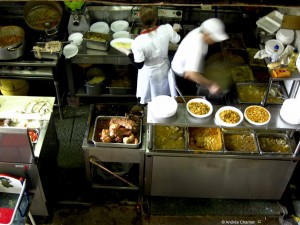
The outstanding restaurants inside the market proved too delicious to resist so we took an unforgettable lunch break.

Hmmm. Wonder if these might be good for amphibian transport?
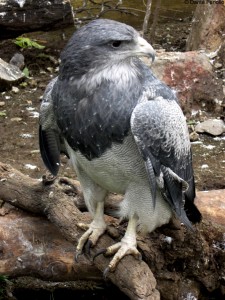
Our return to the zoo took us past the aviary with huge raptorial birds like this Black-chested Buzzard-Eagle (Geranoaetus melanoleucus).
More on the way…
Installing the Darwin’s Frog Breeding Center, Day 7

After much looking around, we finally settled on PVC sections to serve a spacers for the false bottoms.

Next came custom fitted "egg crating," in actuality diffusers for fluorescent lights.

We were excited to find an excellent plastic mesh in Santiago. It proved to be far superior to what we had used in the US. In fact, we brought samples home so we can hunt for it.

Not only was it easy to cut, but also....

it was stiff enough to lay flat.

We worked carefully to make an excellent fit so no stray frogs could find their way beneath the bottoms.

For bird lovers, seeing the endemic Slender-billed Conure (Enicognathus leptorhynchus) was a treat.

As was the spectacular Burrowing Parrot (Cyanoliseus patagonus).
More to come…