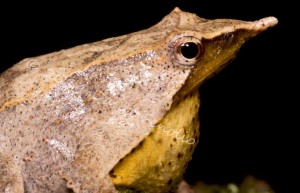
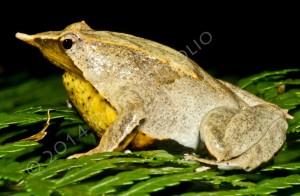
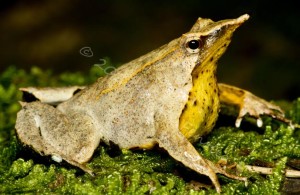
A male darwin’s frog
It’s is always fun to find Dawin’s Frogs (Rhinodema darwinii) in the field. On amphibian surveys last year, we encountered this male with babies in his vocal sac.
Siempre es divertido encontrar las Ranas de Dawin (Rhinodema darwinii) en el campo. En las encuestas de anfibios del año pasado, encontramos a este hombre con bebés en su saco vocal.
Leeches leeches everywhere
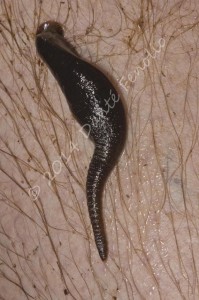
Leeches are not uncommon encounters in the field. Chile has both parasitic and non-parasitic terrestrial leeches. One of the parasitic species is seen below feeding on a human. One of the non-parasitic species (Americobdella valdiviana) is depicted below…this species eats earthworms. They grow to nearly .3 meters in length (~ a foot in length).
Las sanguijuelas no son encuentros raros en el campo. Chile tiene sanguijuelas terrestres tanto parasitarias como no parasitarias. Una de las especies parasitarias se ve abajo alimentándose de un humano. Una de las especies no parasitarias (Americobdella valdiviana) se muestra a continuación … esta especie come lombrices de tierra. Crecen hasta casi .3 metros.
![IMG_2966[1]](http://www.savedarwinsfrogs.org/blog/wp-content/uploads/2015/06/IMG_29661-225x300.jpg)
![IMG_2972[1]](http://www.savedarwinsfrogs.org/blog/wp-content/uploads/2015/06/IMG_29721-300x225.jpg)
More field work with the Mehuín Green Frog (Insuetophrynus acarpicus)
We devoted a considerable amount of our field time last year to surveying streams for the Mehuín Green Frog, Insuetophrynus acarpicus. This species has suffered from habitat loss and is widely considered one of the most endangered frog species in the world.
El año pasado dedicamos una cantidad considerable de nuestro tiempo de campo a inspeccionar las corrientes de la Rana Verde de Mehuín, Insuetophrynus acarpicus. Esta especie ha sufrido la pérdida de hábitat y es considerada una de las especies de ranas más amenazadas del mundo.
Amphibian survey at Oncol National Park, Los Rios, Chile
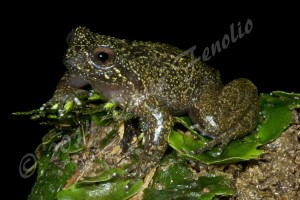
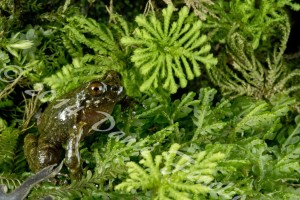
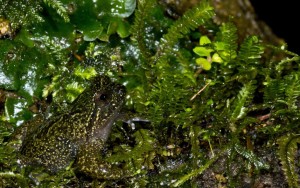
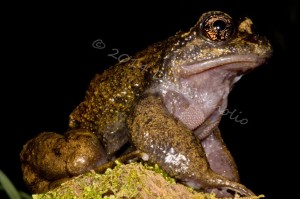
Late in 2014, our team performed an amphibian survey at Oncol National Park, Los Rios, Chile. One of the amphibians encountered was this mature adult male Alsodes norae. When males are ready to breed, they develop the spines on their chest that can be seen in one of the images below. Their forearms also become larger and more robust. These things presumably allow males to hold onto females in the prereproductive embrace known as “amplexus.”
A fines de 2014, nuestro equipo realizó una encuesta de anfibios en el Parque Nacional Oncol, Los Ríos, Chile. Uno de los anfibios encontrados fue este macho adulto maduro, Alsodes norae. Cuando los machos están listos para reproducirse, desarrollan espinas en su pecho que se pueden ver en una de las imágenes a continuación. Sus antebrazos también se hacen más grandes y más robustos. Estas cosas presumiblemente permiten que los machos se aferren a las hembras en el abrazo prerproductivo conocido como “amplexus”.
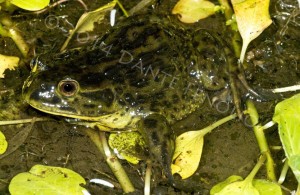
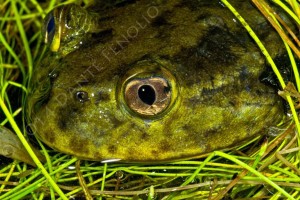
An encounter with the Chilean Widemouth Frog (Calyptocephalella gayi)
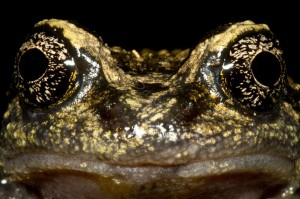
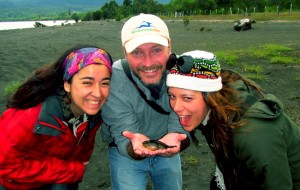
On an amphibian survey in south Chile (November 2014), with Dr. José Nuñez and his graduate students, we encountered a breeding aggregation of the Chilean Widemouth Frog (Calyptocephalella gayi). Their tadpoles are among the largest in the world.
En una encuesta de anfibios en el sur de Chile (noviembre de 2014), con el Dr. José Núñez y sus estudiantes graduados, encontramos una agregación de reproducción de la rana chilena de Widemouth (Calyptocephalella gayi). Los renacuajos están entre los más grandes del mundo.
We were just featured in an online wildlife magazine from Italy!!
Please check it out here:
https://www.facebook.com/pages/Anima-Mundi-Adventures-in-Wildlife-Photography/153627834692022
OR go to our “NEWS” section from the main page and download the PDF.
Wildlife encountered in Chile’s temperate rainforests
While we work in the field with endangered amphibians, we often get to see spectacular wildlife. Here are some examples from recent field expeditions:
Mientras trabajamos en el campo con anfibios en peligro de extinción, a menudo podemos ver la vida silvestre espectacular. Aquí hay algunos ejemplos de expediciones de campo recientes:
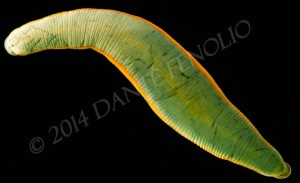
A giant terrestrial leech (Americobdella valdiviana) from Los Rios, Chile – Una sanguijuela terrestre gigante (Americobdella valdiviana) de Los Rios, Chile
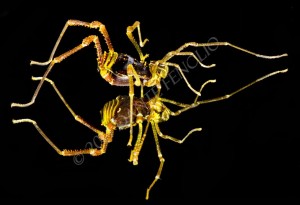
A beautiful Chilean “Daddy Long Legs” or opilionid – Un hermoso chileno “Daddy Long Legs” u opilionid
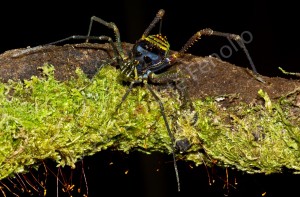
Chilean Opilionid, Valdivia Province, Chile – Opilionide chileno, provincia de Valdivia, Chile
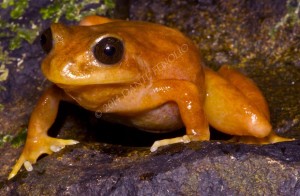
Another beautiful amphibian from Chile’s rainforests (Eupsophus altor) – Otro hermoso anfibio de las selvas tropicales de Chile (Eupsophus altor)
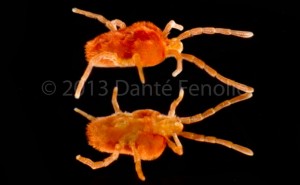
A Red Forest Mite – Un ácaro del bosque rojo
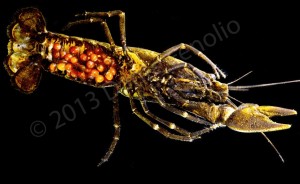
A Chilean crayfish (Samastacus spinifrons) “in berry” – Un cangrejo de rio de Chile (Samastacus spinifrons) “in berry”

the eggs – los huevos
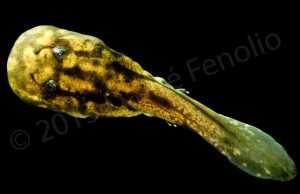
Tadpole (Telmatobufo australis) – Renacuajo (Telmatobufo australis)
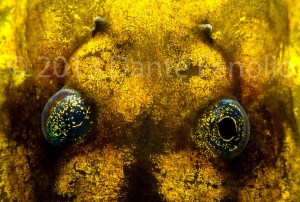
Tadpole (Telmatobufo australis) – Renacuajo (Telmatobufo australis)
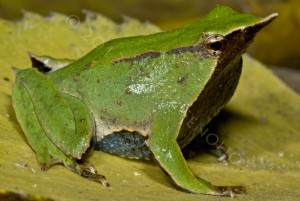
Darwin’s Frog (Rhinoderma darwinii) – Rana de Darwin (Rhinoderma darwinii)
More soon – planning more field work
Más pronto – planeando más trabajo de campo
A critically endangered frog from coastal Chile
There are am lot of amphibian species that are in decline in Chile. One species that is widely recognized as critically endangered is the Mehuín Green Frog (Insuetophrynus acarpicus). We work with a biologist, Dr. José J. Nuñez, to determine the current distribution of this species and if remaining populations have amphibian diseases. Several key problems threaten this species: (1) Loss of habitat is the main issue. Most of the coastal rainforest is gone. The few remaining tracts of forest where this species is found MUST be saved. (2) Emergent infectious amphibian disease has been found in the area where these frogs still exist. (3) There are few conservation programs of any kind promoting captive assurance colonies of any amphibian species in Chile aside from Darwin’s Frogs -we are doing exactly that.

Unfortunately, much of the coastal forests have been removed for agriculture.
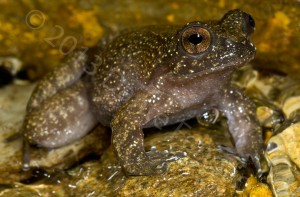
But there still are a few streams that accommodate this beautiful little frog (Insuetophrynus acarpicus)
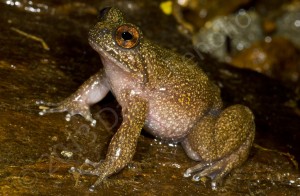
There are fewer than six known localities where this species can still be found.
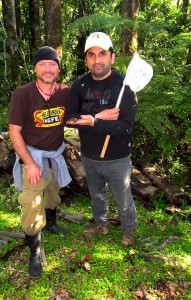
Drs. Fenolio (left) and Nuñez (right) working in the field with the Mehuín Green Frog (Insuetophrynus acarpicus).
More to come on this endangered species and our work with it.
Building a new amphibian conservation lab at the National Zoo of Chile
Our team was able to implement a new lab at the National Zoo of Chile in Santiago. We made the lab from PMODS or “built on site” shipping containers. Here is a photo documentary on the new labs going in…
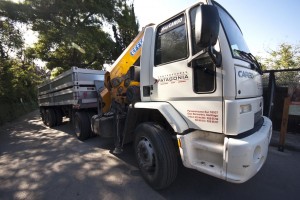
Trucks delivered the pods in the morning.
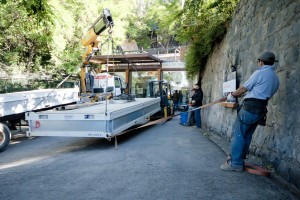
An entire crew unloaded the PMODS from the truck
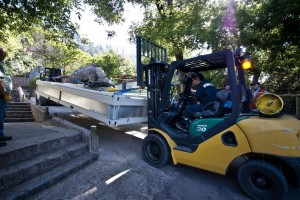
Forklifts were used to carry the PMODS up the narrow pathways of the zoo
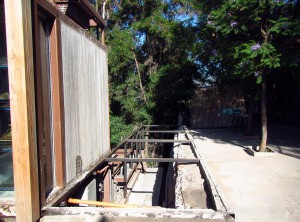
Steel platforms had been built for the pods to sit on
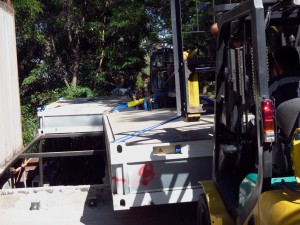
Fork lifts were used to nudge the PMODS onto their platforms.
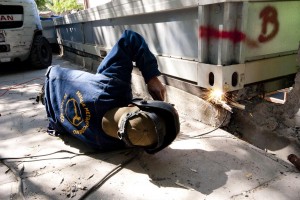
The base of the units were welded to the platforms
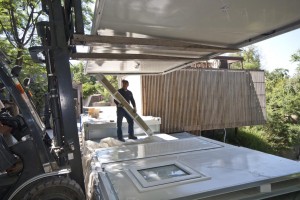
The roof of the PMOD is then lifted by fork lifts.
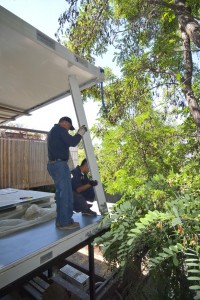
Corner supports are set in place.
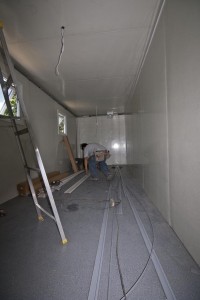
Walls are put up

Starting to look like a lab!!

Electrical was installed inside.

Lots of outlets for things like pumps, filters, lights…

Holes were drilled for plumbing.
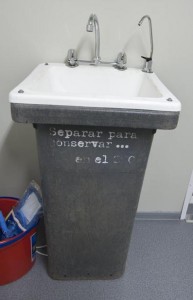
We avoided the use of anything that could rust and used plastics whenever we could.

Installing an RO system for good water quality.
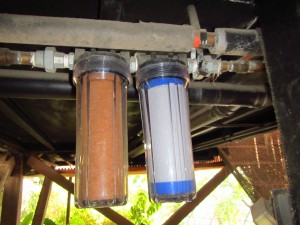
Part of the water filtration unit.
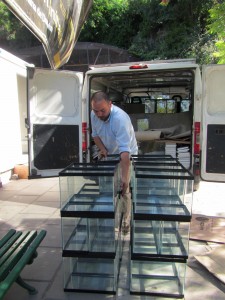
Aquariums were delivered.
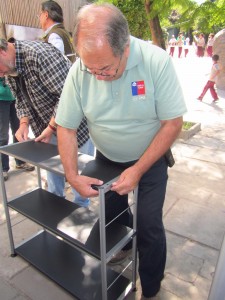
Shelves were assembled.
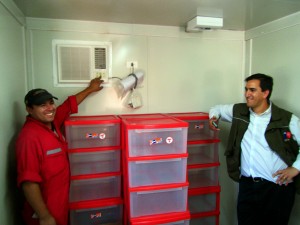
AC unit installation.
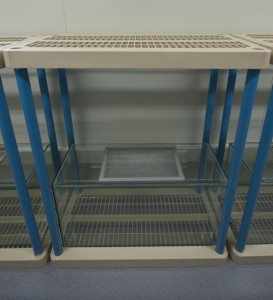
A work bench.
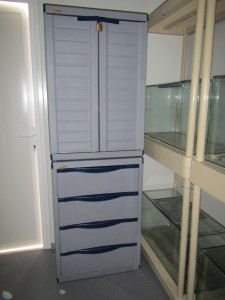
Storage cabinet.
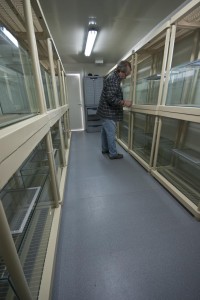
Aquariums placed onto stands.
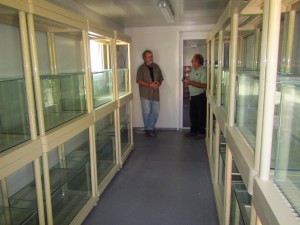
First room of the finished lab.
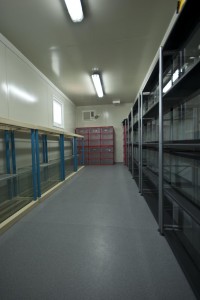
Second room of the finished lab

We have a new amphibian conservation lab at the National Zoo of Chile in Santiago!! Thanks you to all of our many sponsors!!!!
A Critically Endangered Species Faces Tough Times
Our field work in 2011 took us to one of the last remaining haunts for Bullock’s False Toad (Telmatobufo bullocki). This species has suffered from habitat loss and now is found in only a handful of localities. It is also a difficult species to find. Many hours can be spent looking through a forest patch to produce just one or two specimens. We are establishing an assurance colony of this species at the National Zoo of Chile in Santiago. The species is listed as the 5th most endangered amphibian on the planet by the UK’s “EDGE” program.
Here are some images from our field work with this amazing and critically endangered frog…
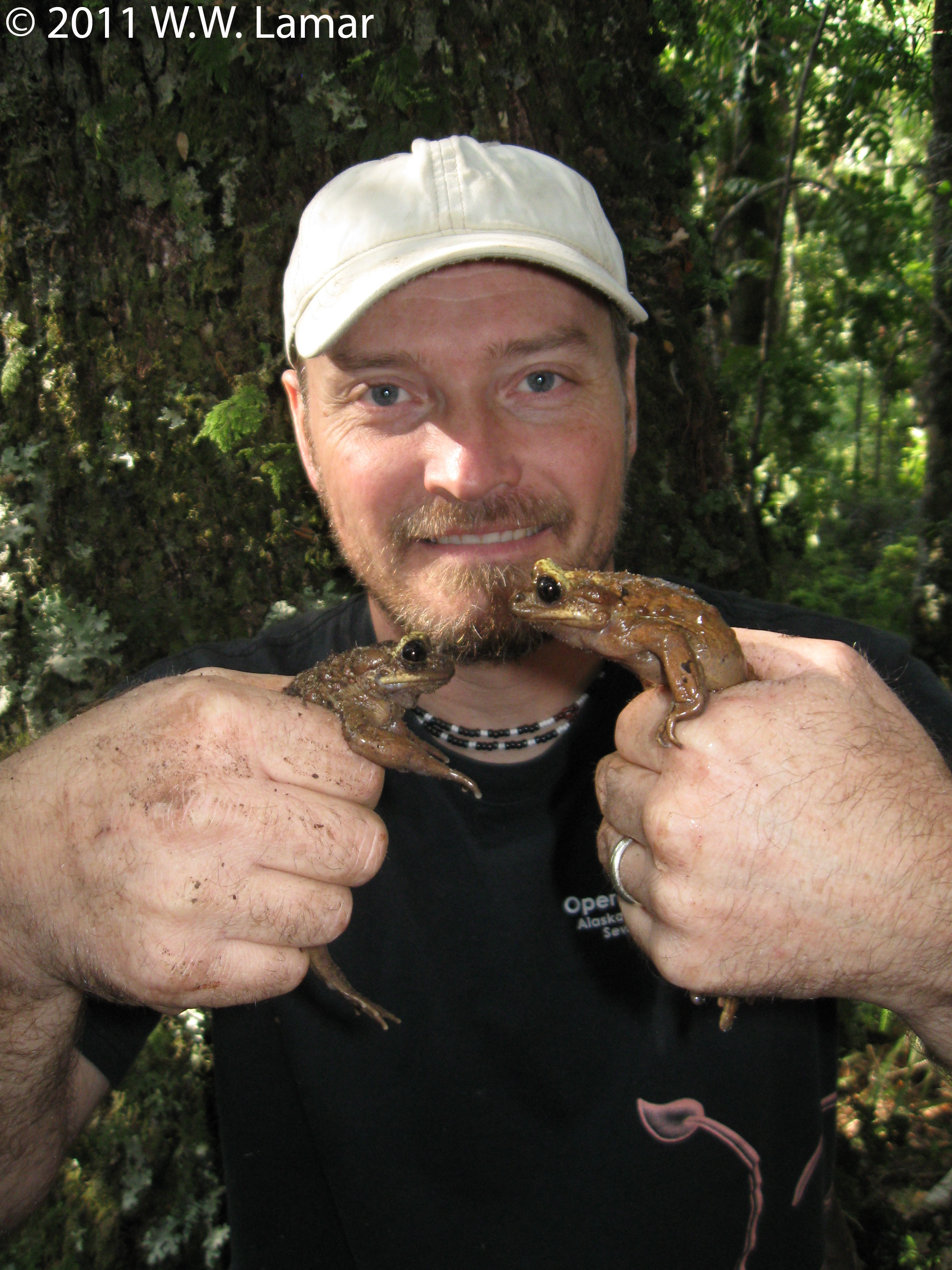
Dr. Fenolio holds up two Bullock’s False Toads (Telmatobufo bullocki) in the field.
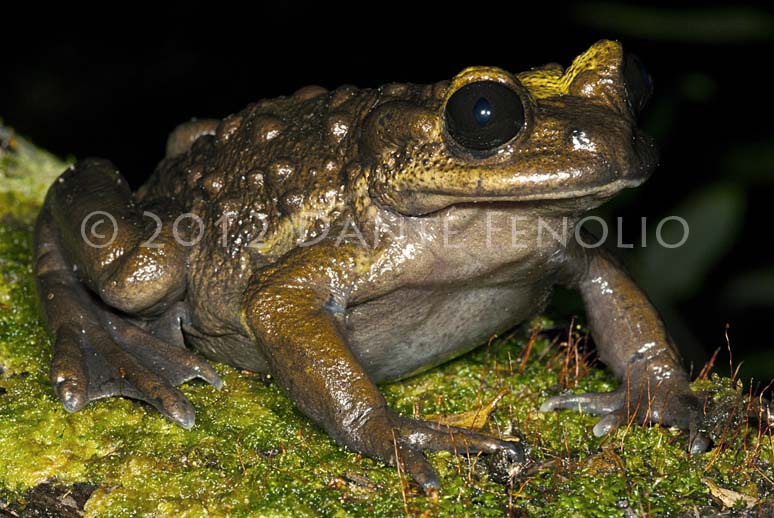
This large female Bullock’s False Toad holds the promise of captive reproduction for the species and a step toward successfully establishing an assurance colony.
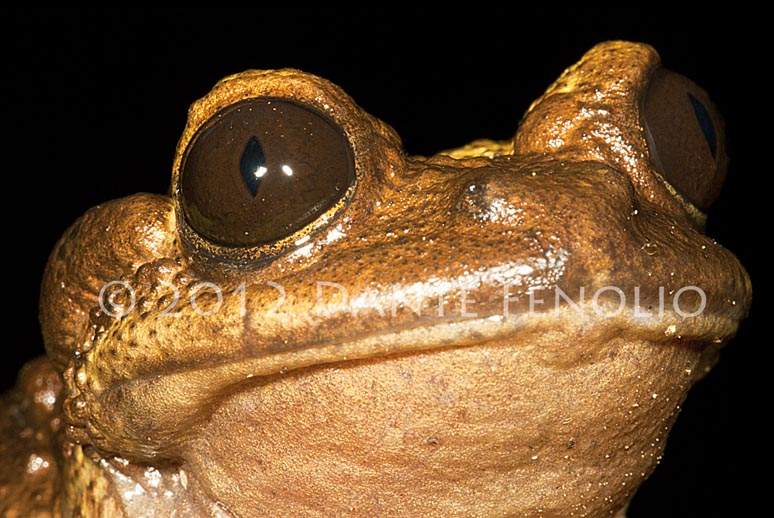
Bullock’s False Toad (Telmatobufo bullocki) has a great face!
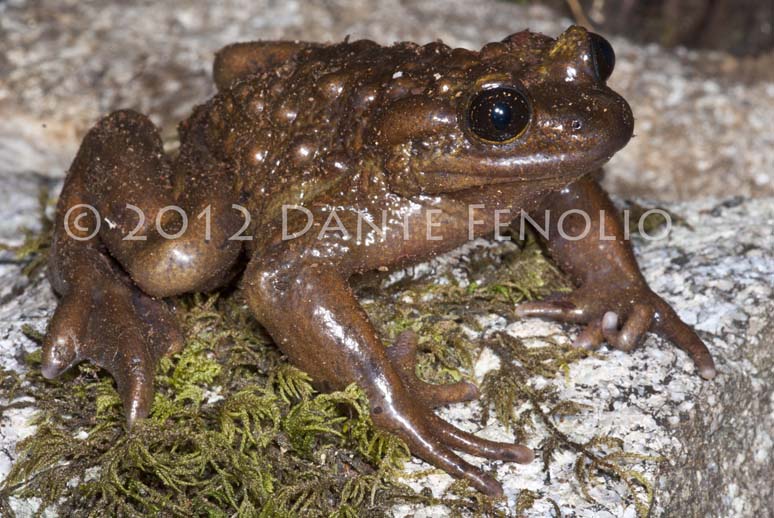
A male Bullock’s False Toad (Telmatobufo bullocki).